Getting the keys to your new home is one of the most exciting moments of your life. Between measuring for curtains, arguing over paint colours and trying to remember which box has the kettle in it, you have a lot on your plate.
Since the electrical system is mostly hidden behind plaster and floorboards, it is usually the last thing on a new buyer’s mind. You flip a switch, the light comes on, and you assume everything is fine. However, moving into a new property means inheriting the DIY mistakes, outdated systems and hidden wear-and-tear of the previous owners.
We highly recommend taking 30 minutes to do a quick electrical check. This simple checklist will help you understand how your new home works, keep your family safe, and identify any issues before they become expensive emergencies.
1. Check Your Fuse Board
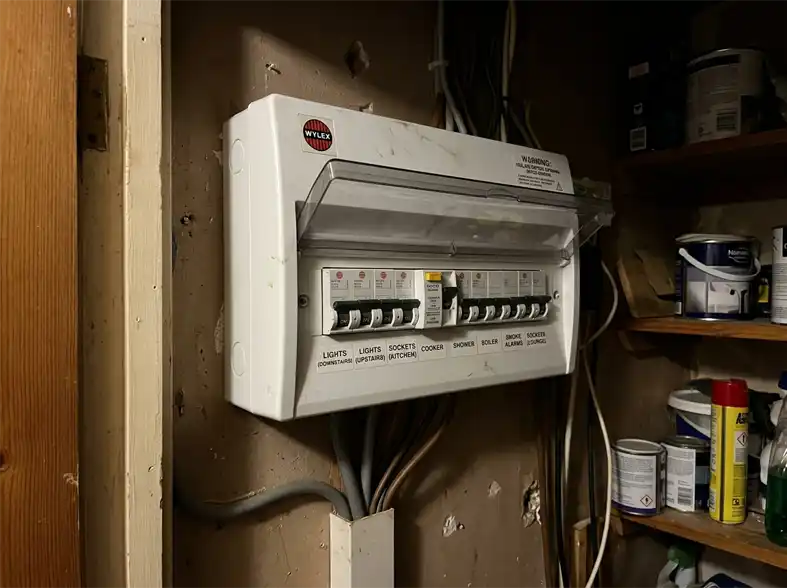
A power cut is the last thing you want to deal with. Before one occurs, check your fuse board (also known as consumer units). They are typically tucked away in utility rooms, under the stairs, in the garage or high up in the hallway. Once you find it, just give it a visual inspection.
Look for these key indicators:
- A wooden backing or cast-iron switches: This is a major red flag indicating the unit is heavily outdated and no longer meets UK safety regulations.
- The “T” (Test) Button: Modern, safe boards are fitted with RCDs (Residual Current Devices) which have a small test button. If your board does not have this, it cannot instantly shut off the power to prevent an electric shock.
- Scorch marks or fishy smells: Any black marks or strange, burning plastic smells mean the unit is actively overheating and requires immediate professional attention.
If you do not see a modern fuse board with RCD and SPD protection, we recommend upgrading. Goodwill electricians can replace the outdated unit with a modern, high-tech consumer unit equipped with life-saving RCDs and surge protection, instantly bringing your new home up to current safety standards. For more information about our fuse board upgrades, please contact us.

2. Read Your Electricity Meter
Your electricity meter is often located next to the fuse board, but it may also be found in a white plastic box on the exterior wall of your house.
Finding this is crucial for two reasons. First, you need to know where your main electrical supply comes into the house. Second, you need to take a meter reading on the day you move in. If you forget to take this reading and submit it to your energy supplier, you could end up paying for the electricity the previous owners used while moving out!
If the home has an older dial meter, simply read the numbers, ignoring any numbers in red. If you have a smart meter, it should send the readings automatically, but it is always wise to take a photo of the digital display on your first day, just in case.
3. Test All Smoke and Heat Alarms
We all know we should test our smoke alarms, but in the chaos of moving, it is easily forgotten. You have no idea when the previous owners last checked them or changed the batteries.
Firmly press the “Test” button on every alarm in the house until it beeps loudly. You should have a smoke alarm on every floor of the property, particularly in hallways and landings and a heat alarm in the kitchen (some houses may not have a heat alarm).
You should also look closely at the plastic casing. Many homeowners do not realise that the alarm units themselves have an expiration date, usually 10 years from the date of manufacture. If they look yellowed and old, they likely need replacing.
4. Plug and Switch Check
Every house has its own quirky wiring layout. You might have a random switch in the hallway that seems to do nothing or a socket in the living room that only works when the main light is on.
While the house is still relatively empty, grab a lamp or a phone charger and walk through every room. Plug it into every single wall socket to ensure they are all receiving power. While you are doing this, check the physical condition of the sockets. Look for cracked plastic, loose faceplates, or brownish scorch marks around the pinholes.
Next, head back to your fuse board. The switches (MCBs) should be clearly labelled with things like “Upstairs Lights” or “Kitchen Sockets.” Flip them down one by one to verify that the labels are actually correct. Previous owners are notorious for adding new circuits and labelling them poorly.
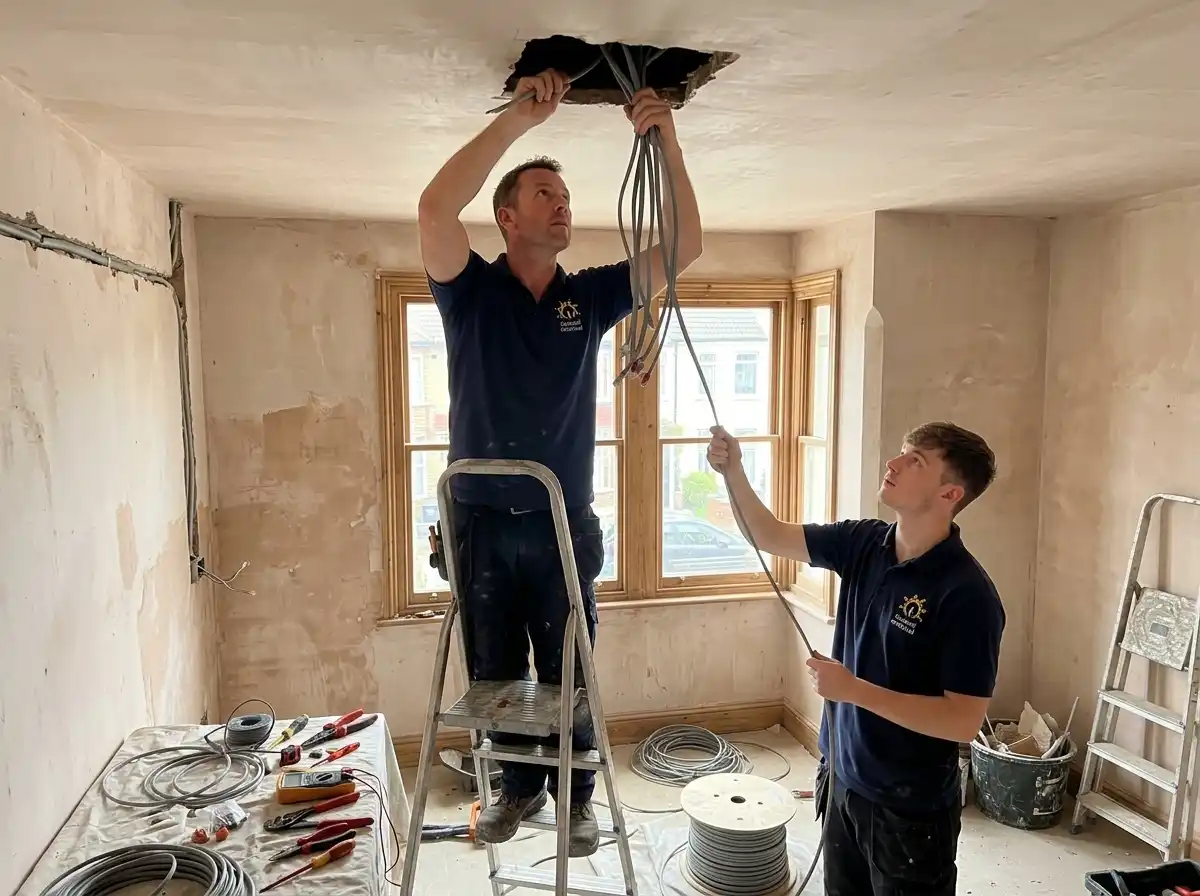
If you find dead sockets, scorch marks or realise the living room does not have nearly enough plugs for your TV and gaming setup, we can help. We offer both partial and full house rewiring, as well as simple socket additions. We can safely add USB charging ports or move sockets to better suit your furniture layout without leaving a mess.
5. Outdoor Electrics
If your new property has a garden, a shed or a driveway, take a walk outside. Outdoor electrical fittings face brutal weather conditions and degrade much faster than indoor wiring.
Check that the covers on any outdoor plug sockets close securely and are not cracked. Look at the security lighting, do the motion sensors actually work or are the bulbs blown? If there is power running to a garden shed or water feature, ensure the cables are safely buried or clipped, not just trailing across the lawn.
Need to complete peace of mind? Book a Fixed Wire Test
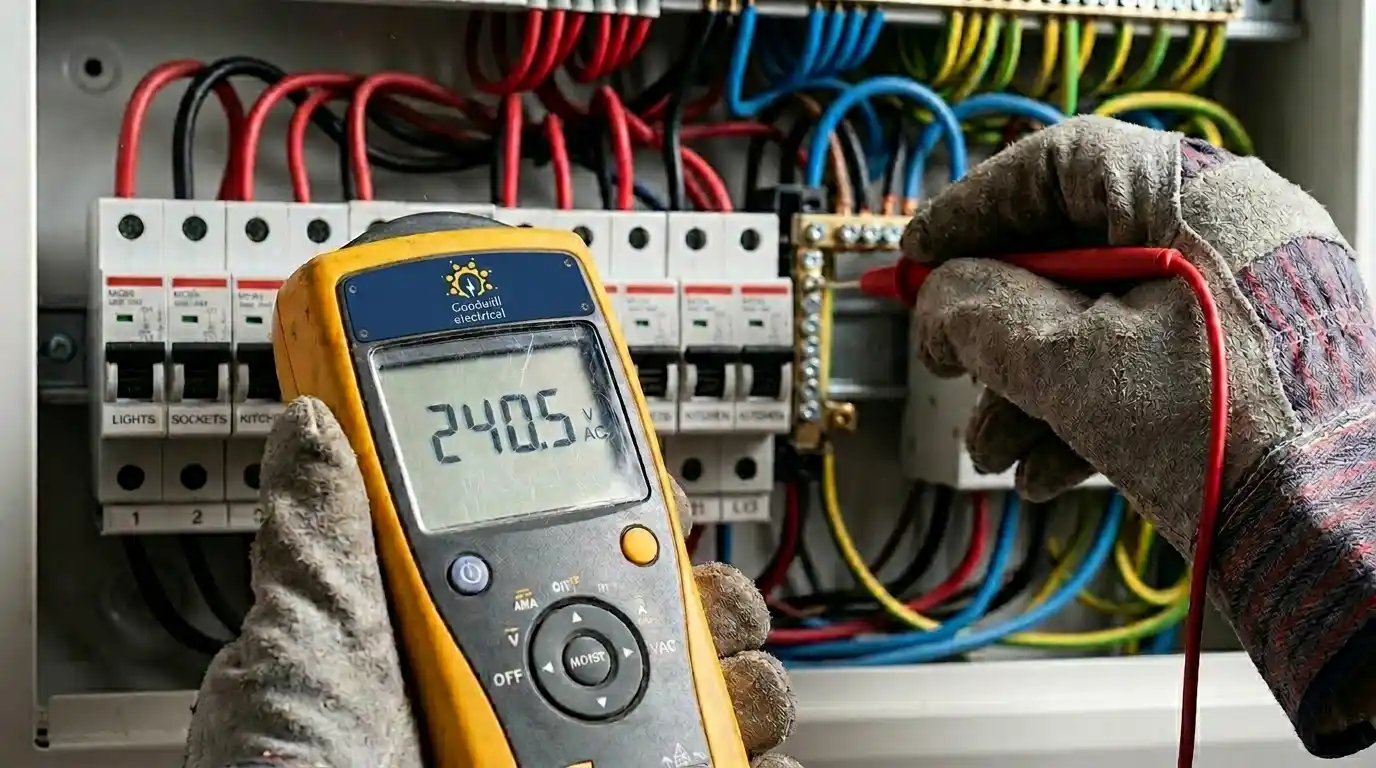
If you have completed your electrical checks and feel unsure about the state of the wiring, the best thing you can do for your new home is to book an Electrical Installation Condition Report, also known as Fixed Wire Testing.
Because the majority of your wiring is hidden behind the walls, you simply cannot see if the cables are deteriorating or if the previous owner’s DIY projects are a fire risk. Our NICEIC-approved engineers will come out and test your home’s network. We will provide you with a comprehensive report highlighting exactly what is safe, what needs attention and what requires urgent repair.
Get in touch with the friendly team at Goodwill Electrical today. We are here to answer your questions, provide honest advice and deliver top-quality electrical services that let you unpack and relax with total peace of mind.