
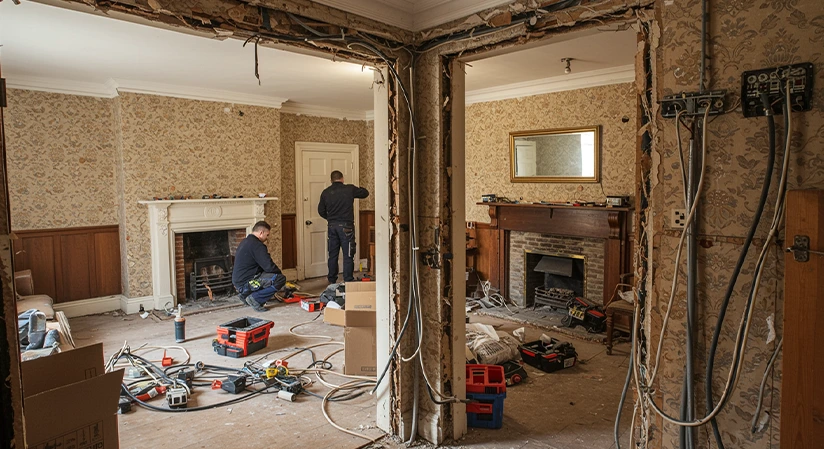
Rewiring your home is an essential investment to keep your property safe, as it improves functionality and ensures compliance with modern standards. For UK homeowners, understanding the costs, the process involved, whether you actually need one, and what influences pricing is essential when planning this crucial upgrade. Whether you’re considering a partial or full house rewire, this guide will give you a clear breakdown of costs, factors to consider, and the benefits you can expect.
Average Cost to Rewire a House
The average cost to rewire a house depends on whether you opt for a partial or full rewire. For a full house rewire, a standard two-bedroom property might cost between £3,000 and £4,500, while a three-bedroom home could range from £4,500 to £6,500. Larger homes, such as those with four or more bedrooms, may see costs exceed £7,000 depending on the project’s complexity. When you choose Goodwill Electrical, our full house rewires usually cost between £2,500 and £5,000.
Partial rewires are more budget-friendly as they involve working on specific circuits or rooms rather than the whole property. For instance, the partial rewire cost of updating a kitchen or living room might range from £500 to £2,000, depending on the required upgrades and any additional installations. No matter the scope, we always recommend obtaining an individual quote based on your specific property. At Goodwill Electrical, we visit your property beforehand to provide you with a more accurate free quote, which is also more budget-friendly.

Factors That Affect the Cost of a House Rewire
Several key factors determine the cost of rewiring a house. First and foremost is the size of the property. Larger homes naturally require more materials and additional labour, leading to higher costs. For example, the expense of rewiring a one-bedroom flat differs significantly from that of a five-bedroom house.
The age and condition of your property can also impact pricing. Older properties often present more challenges during a rewire, with outdated systems requiring full replacements and hidden wiring being tougher to access. Furthermore, the scope of the project plays a critical role. A partial rewire is more affordable as it focuses on specific areas, such as a kitchen or single circuit, while a full house rewire encompasses the entire property—a more extensive and costly undertaking.
Another factor to consider is any upgrades or additional installations you might want to include in your project. Features like modern light fixtures, additional sockets, USB charging points, or even smart home systems can increase the overall expense but deliver significant long-term value. Finally, your location within the UK can influence labour rates, with costs typically higher in London and the South East compared to other regions. With Goodwill Electrical, we offer affordable rates to the West Midlands and surrounding areas that won’t break the bank.
What Can Be Installed During a Rewire?
A house rewire is more than just replacing worn-out wiring, it’s an opportunity to modernise your electrical system. Many homeowners take advantage of the process to install energy-efficient LED lighting or update outdated light fixtures. Extra sockets can be added to accommodate modern requirements, like multiple devices and appliances, while integrated USB charging points are a practical addition for charging phones and tablets.
For tech-savvy homeowners, smart home systems, including smart lighting and heating controls, may be installed during a rewire. Outdoor lighting, like garden or security fixtures, can also be incorporated to enhance the exterior of your home. Upgrading to a new consumer unit not only improves function and safety but also ensures your electrical system complies with UK safety standards.
Investing in these additional features during a rewire creates a future-proofed home that meets both current and evolving technology demands.
What is the Process of Rewiring a House?
The process of rewiring a house involves several essential steps designed to ensure safety and efficiency. We can’t say for certain that all electrical firms do this, but at Goodwill Electrical, we send one of our qualified electricians for the initial survey, who will inspect your current electrical system to assess its condition and recommend the best course of action. Following this assessment, a plan is developed in collaboration with you to finalise the placement of new sockets, switches, and any upgrades or additional features.
Preparation is the next step, which typically involves moving or protecting furniture and flooring to allow access to walls and floors where wiring runs. The rewiring itself includes removing old cables, switches, sockets, and fuse boxes to replace them with modern counterparts. Once the new system is installed, thorough testing is conducted to ensure safety and compliance with UK standards. A compliance certificate is provided upon completion.
While the process can be disruptive, requiring furniture relocation and subsequent restoration of walls, the outcome is well worth it. You’ll be left with a safer, more efficient home electrical system designed to last.

Signs You Need an Immediate House Rewire
Certain issues indicate that your property may be overdue for a rewire. Frequent tripping of circuit breakers or fuses often highlights overloaded or faulty wiring. Flickering or dimming lights could suggest unstable electrical flow, while burning smells or scorch marks on outlets may point to overheating. Outdated consumer units lacking RCD protection are another warning sign.
Visible damage, such as exposed wires, cracks in insulation, or deteriorating sockets, should be taken seriously as they can lead to live electrical currents or safety hazards. If your property is older and still relies on original wiring, it’s worth having it inspected, even in the absence of obvious issues.
Importance of a House Rewire
A house rewire is essential for ensuring your home’s electrical safety and efficiency. Old wiring systems pose risks ranging from frequent power outages to fires caused by electrical faults. Beyond addressing these dangers, a rewire enables your home to handle the demands of modern appliances and technologies, enabling you to enjoy convenience and reliability without concern for circuit overload.
By upgrading your electrical infrastructure, you not only reduce potential hazards but also future-proof your property. A rewire guarantees compliance with UK safety standards, giving your property a competitive edge should you wish to sell it later.
Benefits of Rewiring Your House
- Improved Safety: Reduced risks of electrical faults or hazards.
- Modern Features: Supports smart systems and energy-saving components.
- Energy Efficiency: Minimises energy waste and reduces bills.
- Added Value: Makes your home more appealing to buyers.
- Regulation Compliance: Ensures your home meets safety standards.
- Peace of Mind: Confidence in a reliable and safe electrical system.
Contact Goodwill Electrical for Your House Rewire Needs
At Goodwill Electrical, we specialise in professional partial and full house rewires as well as extension wiring, offering tailored solutions that prioritise safety and quality. Whether you need a complete overhaul of your electrical system or a more focused approach for specific areas, our skilled electricians deliver work of the highest standard.
To receive a free, personalised quote, please contact us today!


