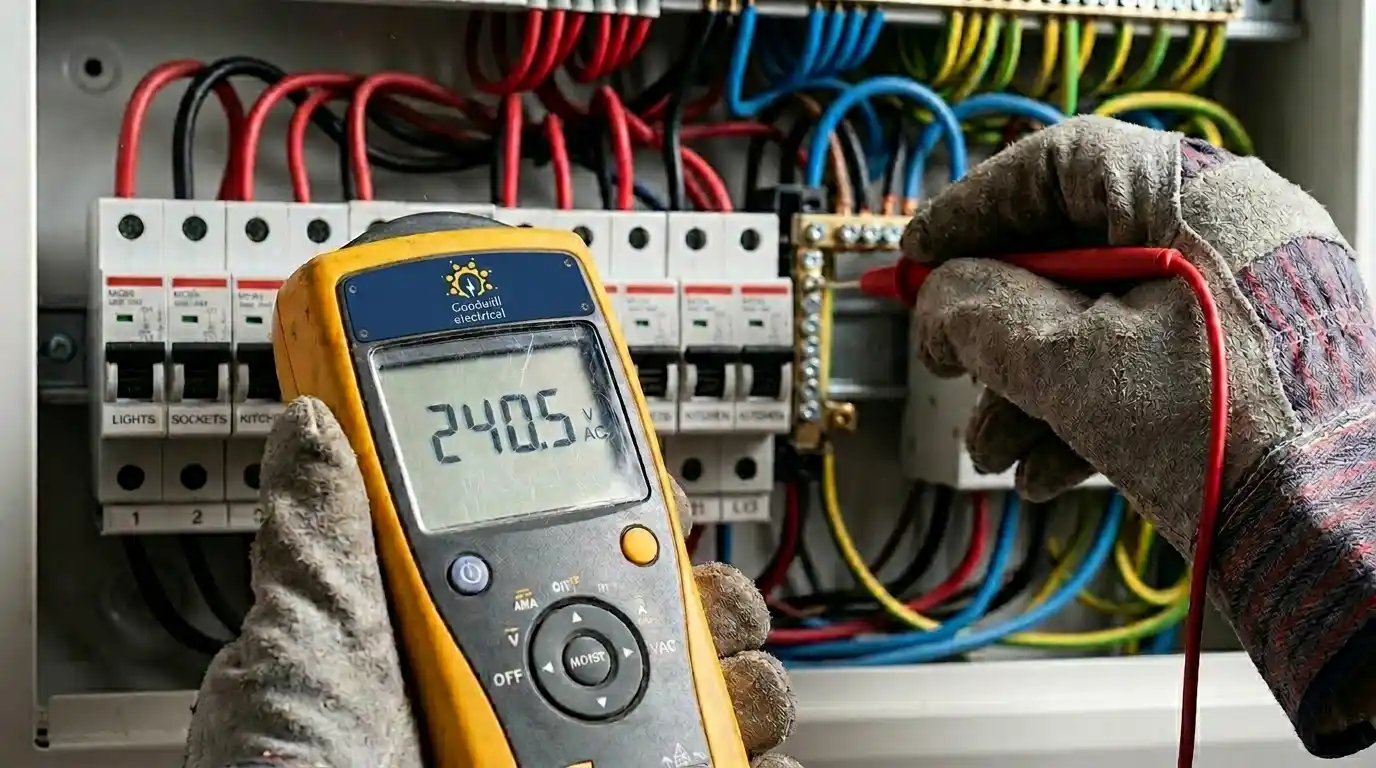
A sudden power cut in the middle of your evening is always frustrating, especially when you hear that ‘click’ sound from the consumer unit. While a tripped circuit breaker is a routine issue for most households, staring at a fuse box can be intimidating if you don’t know what you’re looking for. Getting the power back on is actually a quick, safe DIY fix. Here is how to do it.
What is a Circuit Breaker and How Does It Work?
Before we reset the circuit breaker its important for you to know what it is and how it works. Your consumer unit (often called a fuse box or fuse board) is the central control hub of your home’s electrical system. Inside, it houses several switches called circuit breakers.
Think of a circuit breaker as an automatic safety guard. Its job is to monitor the flow of electricity running through your home’s wiring. Electricity naturally generates heat as it travels. If a wire carries more electrical current than it was designed to handle, it gets dangerously hot and could potentially melt its insulation and start a fire.
When a circuit breaker detects this excess current, it “trips”, meaning it automatically flips the switch to cut off power to that specific room or the electrics on that circuit. It is a vital safety mechanism designed to protect you, your family, your appliances, and your property.
Why Do Circuit Breakers Trip?
To stop the power from constantly cutting out, it helps to understand why the switch flipped. There are three main reasons:
1. Overloaded Circuits (The most common cause): If you have a space heater, a tumble dryer, a microwave, and a kettle, they are most likely all running on the same circuit, which means they will draw more power than the wires can safely carry. The breaker trips to prevent the system from overheating.
2. Short Circuits: This happens when a “live” wire accidentally touches a “neutral” wire, creating a sudden, massive surge in electricity. This is much more dangerous than a simple overload and is often caused by a faulty household appliance, damaged wiring or loose connections.
3. Ground Faults: Similar to a short circuit, this occurs when an active wire touches a ground wire or the side of a metal appliance. This often happens in areas with high moisture, like kitchens, bathrooms or outdoor sockets.
How to Safely Reset a Tripped Breaker
Now that you know why it happens, here is what to do when the power goes out. You don’t need any electrical experience to do this safely.
Step 1: Turn off and unplug your appliances: Before you touch the fuse box, go to the room that lost power (or to the appliances or devices on that circuit). Turn off the wall switches and physically unplug the devices that were running when the power tripped. If you skip this step and flip the breaker back on, the sudden surge of electricity could damage your electronics or instantly trip the breaker again.
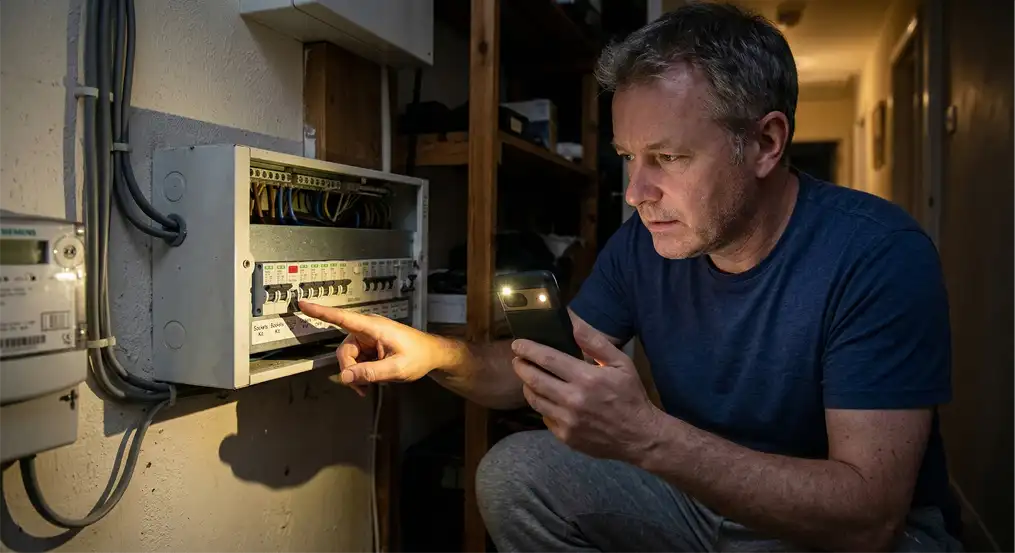
Step 2: Locate your consumer unit: Grab a torch and find your fuse box. They are usually located in the hallway, under the stairs, in the garage, or near the front door.
Safety Tip: Ensure your hands are completely dry before touching the consumer unit.
Step 3: Identify the tripped switch: Open the cover of the consumer unit. You will see a row of switches. Most of them will be pointing in the “ON” position (usually facing UP). Look for the one switch that is out of line, it will be pointing “OFF” (usually DOWN) or resting halfway in the middle. This is your tripped breaker.
Step 4: Reset the breaker: To restore power, firmly push the tripped switch all the way down to the “OFF” position first (if it was stuck in the middle). Then, push it firmly all the way back up to the “ON” position. You should feel a solid click, and the lights should come back on.
Step 5: Test your appliances: Go back to the room and plug in your appliances one by one. If plugging in a specific item or device immediately trips the power again, you’ve found a faulty appliance. Keep it unplugged, then repair or replace it.
Is It Safe to Keep Resetting a Tripping Breaker?
What if you reset the breaker, and it immediately trips again without anything plugged in? Or what if it trips every single day?
It is not safe to continuously reset a tripping circuit breaker.
Remember, the breaker is tripping for a reason, it is actively trying to save your house from an electrical fire. Forcing a breaker to stay on when there is an underlying fault is dangerous. Every time a breaker trips, its internal mechanisms sustain a tiny bit of wear and tear. If you repeatedly force it back on, the breaker itself can permanently break. If the breaker fails, it will no longer cut the power, allowing wires to overheat, melt, and catch fire behind your walls.
As a general rule of thumb: if a breaker trips once, reset it. If it trips twice in a row, leave it off and investigate.
When to Call Goodwill Electrical
If you have unplugged all appliances and the breaker still refuses to stay on, or if you notice a burning smell, scorch marks around your sockets, or buzzing sounds coming from the consumer unit, step away immediately. These are tell-tale signs of a severe wiring issue or an outdated fuse board that is failing.
That’s when it’s time to call us. At Goodwill Electrical, our highly trained, fully accredited electricians serve Solihull, Birmingham, and the wider West Midlands area. We specialise in fast electrical fault finding, safe house rewiring, and modern fuse board upgrades. We will quickly and safely diagnose the root cause of your electrical headaches, ensuring your home remains a safe place.
Do not try to fix it yourself when it comes to electricity. If you need help, please contact us.